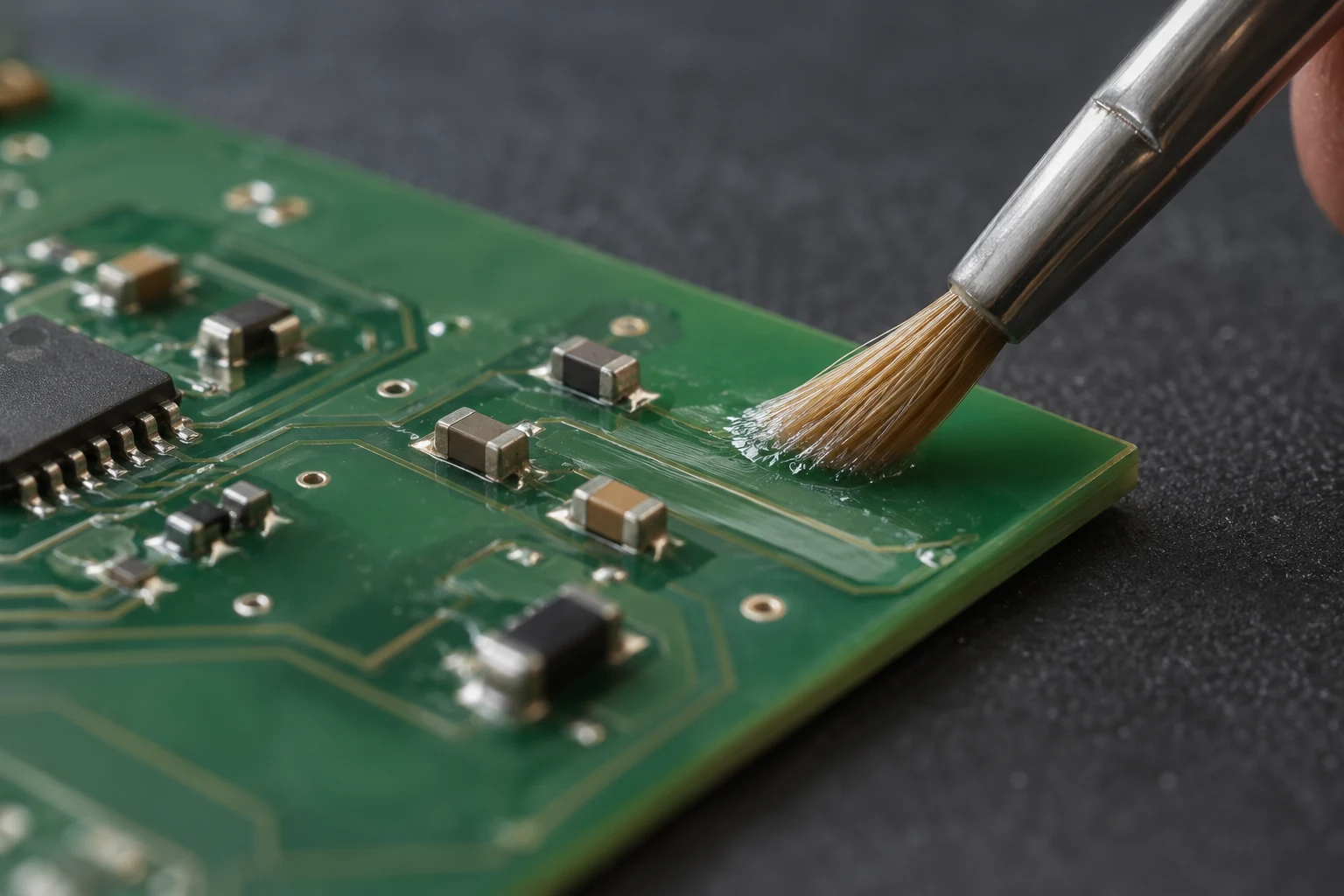
Different tasks, different qualities
The manufacturer's documentation describes Biothan 2 MD 611, for example, as suitable for tough, hard, and mechanically machinable castings. Biothan 2 MD 1770, on the other hand, is described as a crystal-clear, elastic casting resin, suitable for applications including transparent coatings and LED encapsulation. These profiles require different testing and processing steps.
Hardness, flow behavior, and processing time are therefore selected to ensure the precise quality and the intended hardener. A value from another Biothan series is not suitable as a formulation for the chosen system.
Specifically name the raw material base
The manufacturer's data sheet for Biothan 2 MD 611 lists renewable raw materials such as rapeseed, castor oil, and sugar, as well as other formulation components. The data sheet for 2 MD 1770 describes a base of oleo-polyols and caprolactones with additives.
For procurement requirements involving a bio-based component, a description and reference value of the specific quality are needed. Raw material origin, performance characteristics, and environmental impact are assessed separately. The designation "Biothan" alone does not provide any information regarding biodegradability.
Resin and hardener are determined together
The mixing ratio is part of the specified combination. The desired hardness can also depend on the choice of hardener and the intended ratio. Therefore, an inquiry should include the complete resin name, the hardener, and the requirements for the finished part.
Before starting, clarify: What is the ratio by weight? What quantity is needed? How long does mixing, degassing, and pouring take? When can the part be demolded and loaded? These times can vary.
Prepare the processing
Prepare the container and processing conditions according to the documentation for the specific system. If necessary, homogenize the components before dispensing. Weigh the prescribed quantity precisely and mix thoroughly. Degassing and curing are planned according to the product-specific conditions.
For PU systems, moisture levels and surface preparation must also be considered. Before processing, read the safety data sheets for both components and implement the recommended safety precautions. A bio-based raw material component does not replace these requirements.
What kind of sampling is needed?
- Component, geometry and desired transparency or color.
- Mechanical stress and desired hardness or stiffness.
- Temperatures, contact media and electrical requirements.
- Batch quantity, dosing method and available process time.
- Complete resin and hardener specifications as well as required explanations.
Sampling takes place on the intended setup. This allows for an assessment of whether the selected system meets the requirements and fits into the production process.
SILIRESIN Biothan: Request suitable resin-hardener combination and documentation
The current product documentation is decisive for processing.