For a small sample, material is taken from a large container. The scale shows the exact target value. This tells us the quantity – but not yet whether the extracted component corresponds to the intended state.
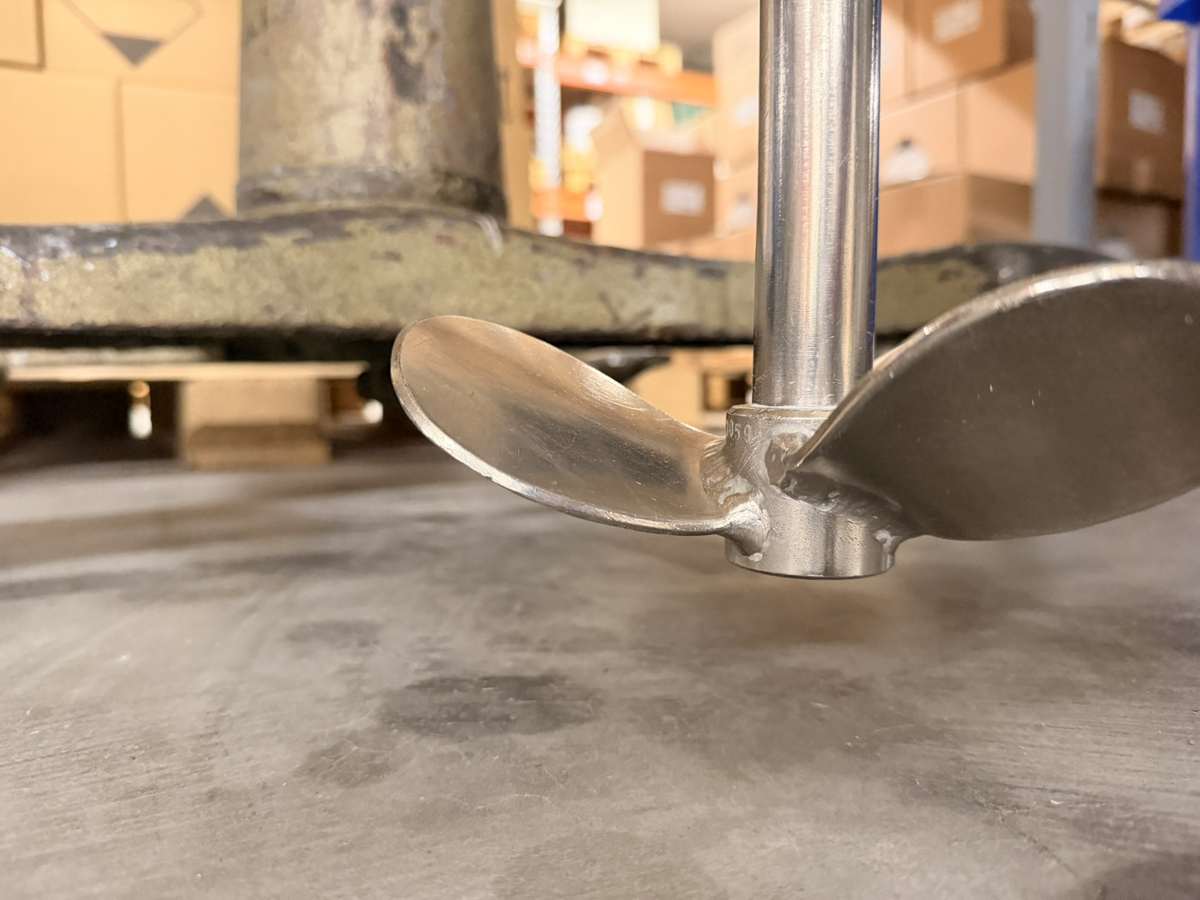
Some systems require their individual components to be stirred before use. This step should be taken before dispensing a portion of the product. Subsequent mixing of already weighed quantities cannot compensate for the preparation of the remaining contents of the container.
Two mixing processes with different tasks
Preparing a single component establishes its intended state. Only the subsequent combination of A and B creates the reactive mixture. The work instructions should describe these processes separately.
A concrete example is BLUESIL RTV 141 A & B.Elkem requires that the two individual components be stirred before use. The instructions recommend a low speed for the subsequent mixing to limit air intake. Preparation and reaction mixing are explicitly considered separate steps here.
This is not an instruction to stir every resin container in the same way. Other products may have different instructions. The procedure follows the exact combination supplied.
The second sample requires the same clarity as the first
Let's take a small production run where the same containers are used on Monday and Thursday. "Same material" then describes the product name, not the intermediate storage and preparation.
Was the container properly closed after removal? Was the same, suitable tool used? Was the required preparation step for the product repeated? These differences can be masked by identical scale readings.
Tool and removal influence the next approach
A tool that has come into contact with both components or another system can transfer material. In sensitive systems, this cross-contamination is a significant source of error. Elkem specifically points out the dangers of insufficiently cleaned tools in connection with addition-curing mold silicones.
A clearly assigned dispensing aid also prevents mix-ups. The process doesn't end with the open container after weighing: the cap and return are part of the next use.
The correct starting point for a deviation
If the second approach differs, the condition of the container, the preparation, and the actual weights are compared first. A changed ratio would already alter the recipe without resolving the original question of dispensing.
Therefore, material analysis requires more than just gram values; the preceding steps are crucial: the type of container, its condition, and any necessary preparation. The scale is an important checkpoint, but it is not the starting point of the material process.
Two practical questions
May I stir only the amount I've taken out?
If the product instructions require preparation of the container before dispensing, stirring the portion later does not replace this step.
Why assign component tools?
This prevents uncontrolled transfer between components or systems. The required cleaning and tooling procedure depends on the material.
Mentioned in the article
BLUESIL RTV 141 A + B (1.1 kg kit) ↗To deepen the connection
Technical Sources and Conditions
The current product documentation is decisive for processing.