


 Silicones, silicone oils, sprays
 Casting and potting resins

Consider a long bracket protruding from a metal housing. A cable runs along its end. The adhesive surface is large, and the adhesive has a high data sheet rating – nevertheless, the connection can open at one edge.
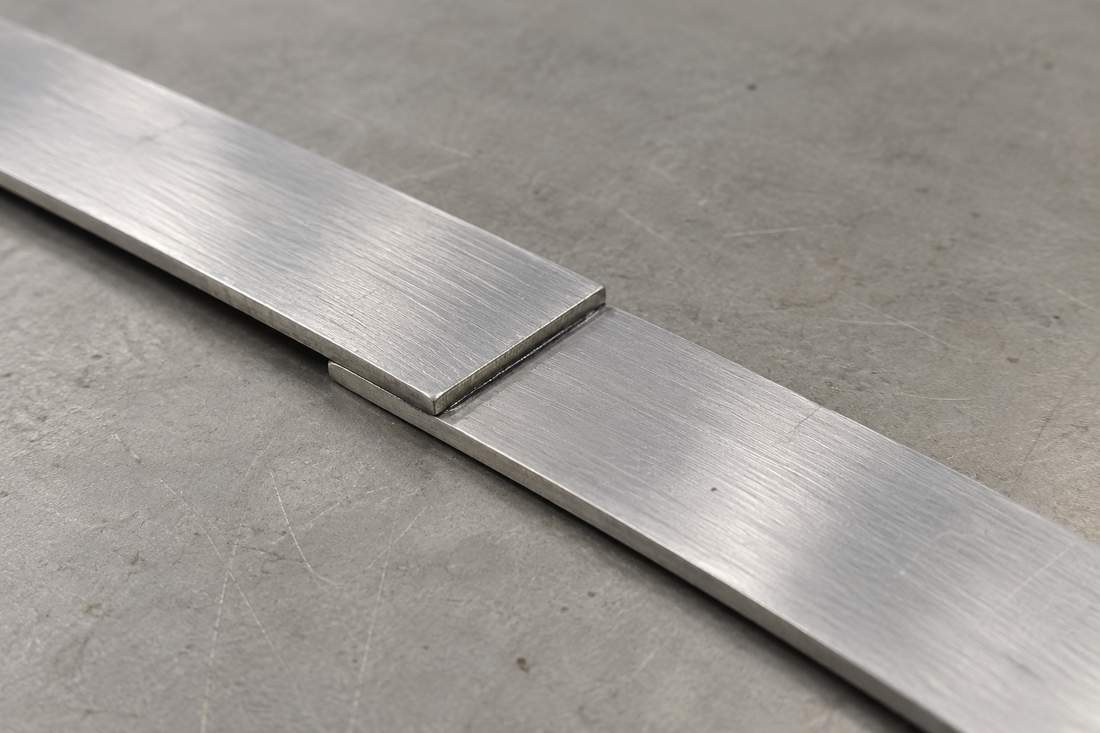
This geometry illustrates why the selection process should begin before consulting the product list. The point of application and the direction of the force determine how the adhesive surface is stressed. The size of the surface alone does not describe this.
Add the lever arm to the sketch
In idealized shear stress, the joined surfaces are loaded parallel to each other. During peeling, one edge lifts off; the stress is distributed differently across the joint. The protruding bracket, with its lever arm, brings precisely this geometric issue into play.
Permabond recommends limiting peel and splitting stresses and distributing loads across the connection in its design guidelines. The guideline therefore illustrates the force application, direction, and potential secondary loads for the holder. This also includes consideration of cable tension during installation. Permabond: Design Guidelines, pages 5–6
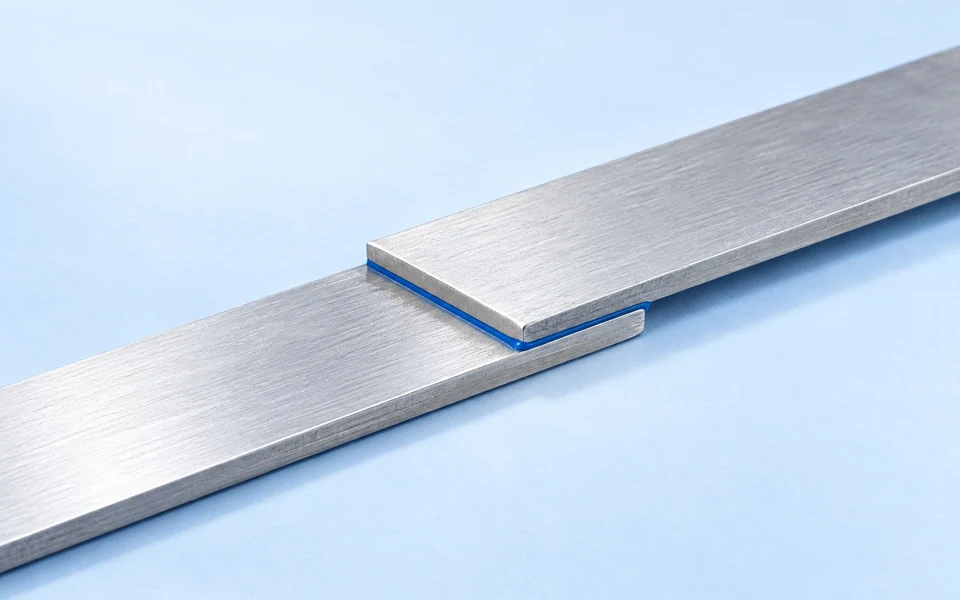
A tensile test with two overlapping sheet metal strips can compare a material pairing. However, it only partially reflects the load on the protruding bracket. Therefore, the intended geometry and its load are also examined when selecting a component.
On which surface should the connection be made?
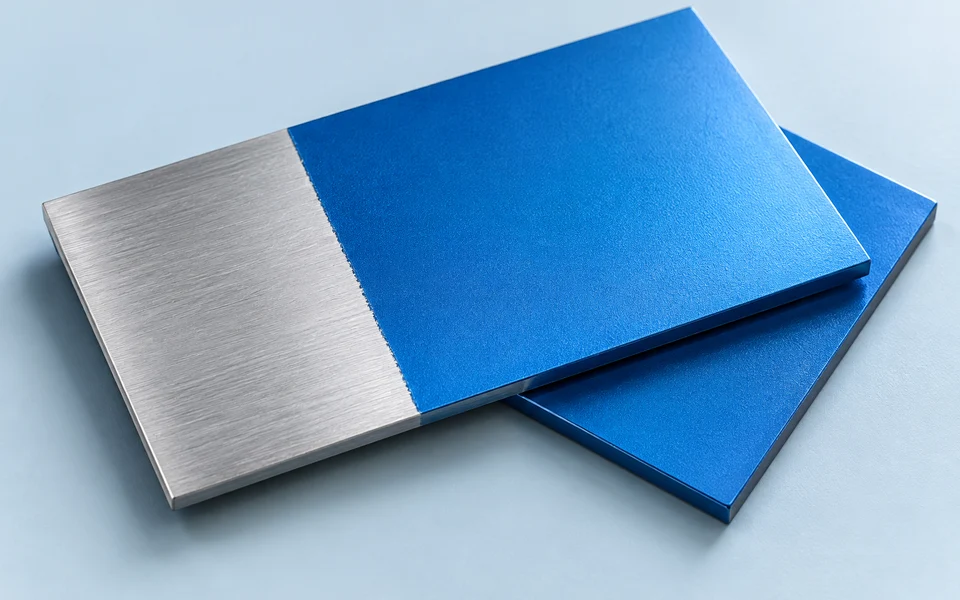
"Aluminum housing" can refer to bare, anodized, painted, or powder-coated material. In the case of a coating, the adhesive first comes into contact with this layer. The LOCTITE technical manual also describes coating delamination as a possible form of substrate failure. Therefore, the adhesion of the coating to the base material is a factor to consider in the overall structure. Henkel: Substrate Failure
For the prototype, the surface and preparation are documented exactly as they will be applied later: coating, cleaning agent, procedure, and timeframe until bonding. A test on bare metal answers a different question than the bond on the finished housing.
If the coating is removed or sanded down during testing, this condition is part of the tested setup. It must be compatible with the design and manufacturing process.
The adhesive includes an assembly process
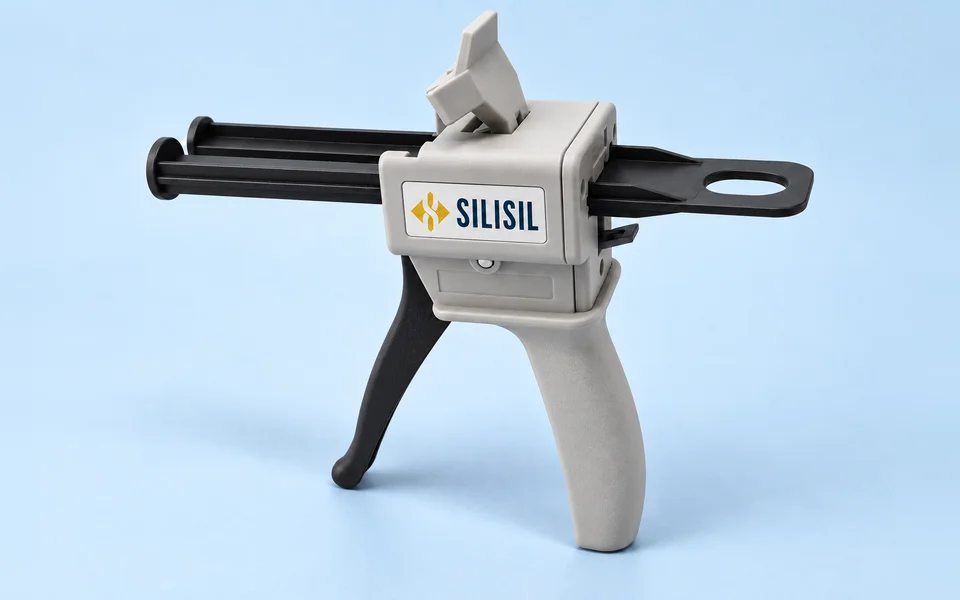
Selection criteria include mixing ratio, working time, joint size, and curing time. An example from the LOCTITE EA 9483 illustrates the required accuracy: resin to hardener ratio 2:1 by volume, but 100:46 by weight. Batch size and temperature also affect the working time. This information is from the June 2014 product version. Henkel: LOCTITE EA 9483
For the holder, this must result in a feasible process: apply, position, maintain the gap, and fix it until the designated time. The first movement and the first load must also be included.
Other systems may require different steps. For structural acrylates, there are both two-component systems mixed before application and no-mix processes with separate application of adhesive and initiator. The choice of process is determined in conjunction with the product. Permabond: Structural acrylates
Build an experiment that assesses the edge
The component geometry and intended stress remain recognizable in the sample comparison. The candidates are processed according to their respective procedures; curing conditions and testing time are included in the comparison.
The criterion is specified in advance, for example: The marked edge remains closed under the specified load. This can be assessed more clearly than "holds well".
After a fracture, both surfaces are examined: Where does the adhesive remain, does the coating detach, is the metal deformed? These observations help in the next step of the investigation. Together with the measured load, they show what the prototype actually performed; its subsequent service life is another question.
Please provide a sketch with a force arrow, a surface description, and the planned assembly sequence for your material request. Discuss metal bonding.
Frequently asked questions
Which secondary load should already be included in the sample setup?
A predictable action, such as pulling or bending a connected cable. Its direction and point of application are recorded in the same diagram as the operating load.
What is helpful for the next attempt after the break?
Both associated fracture surfaces, the observed residues, and the test load are recorded. This allows for differentiation as to which area should be examined next, instead of immediately changing only the adhesive.
Sources
- Permabond: Product Brochure. Accessed 2026-10-25.
- LOCTITE Digital Manual: 7.1.3 Substrate Failure. Retrieved 2026-10-26.
- Henkel: LOCTITE EA 9483.Retrieved 2026-10-25.
- Permabond: structural acrylic adhesives. Retrieved 2026-10-25.