


 Silicones, silicone oils, sprays
 Casting and potting resins

The silicone in the mixing cup is elastic, while a sticky zone remains on the model. This difference is a valuable clue: the cup and the model have come into contact with the material under different conditions. Therefore, the fully treated model surface is the correct starting point for the investigation.
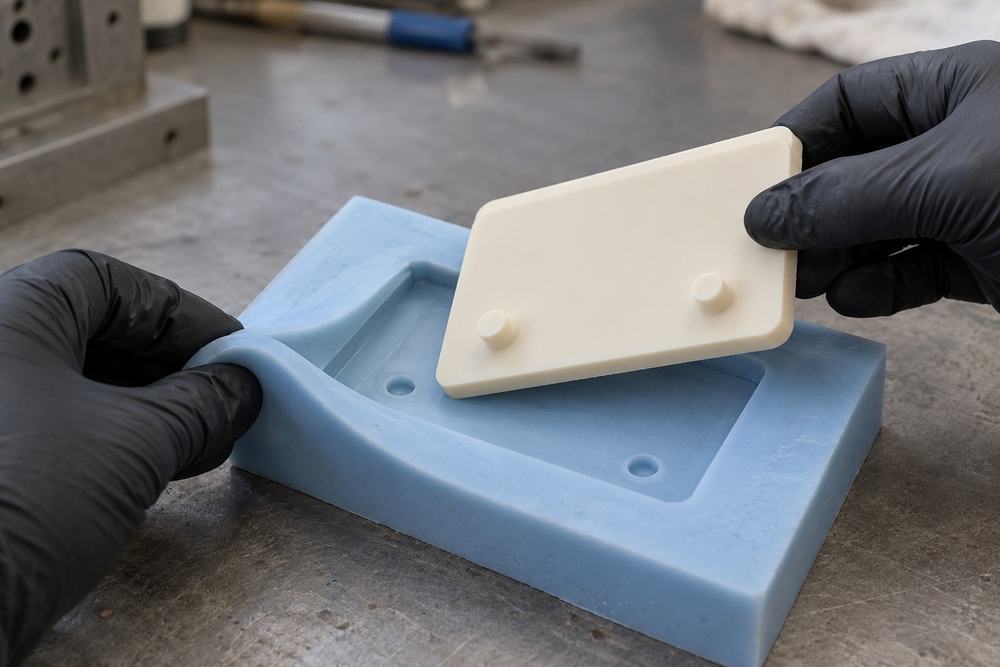
In 3D printing, this means more than just specifying the printing resin. Post-curing, cleaning, varnishing, and release agents are all part of the process that the silicone later encounters.
What this brief attempt at contact is intended to clarify
Certain contact materials can inhibit the curing of addition-curing silicones. For BLUESIL RTV 3428 A&B from the SILITECH range, Elkem lists, among others, sulfur-cured natural rubber, condensation silicones catalyzed with metal salts, PVC stabilizers, and amine-curing epoxies. If in doubt, the manufacturer recommends testing with a small quantity on a limited area. BLUESIL RTV 3428 A&B: Technical Data Sheet
The test is intended to replicate the later contact as accurately as possible. An unprocessed remnant of the printed material tests something different than the cleaned, varnished, and release agent-treated model.
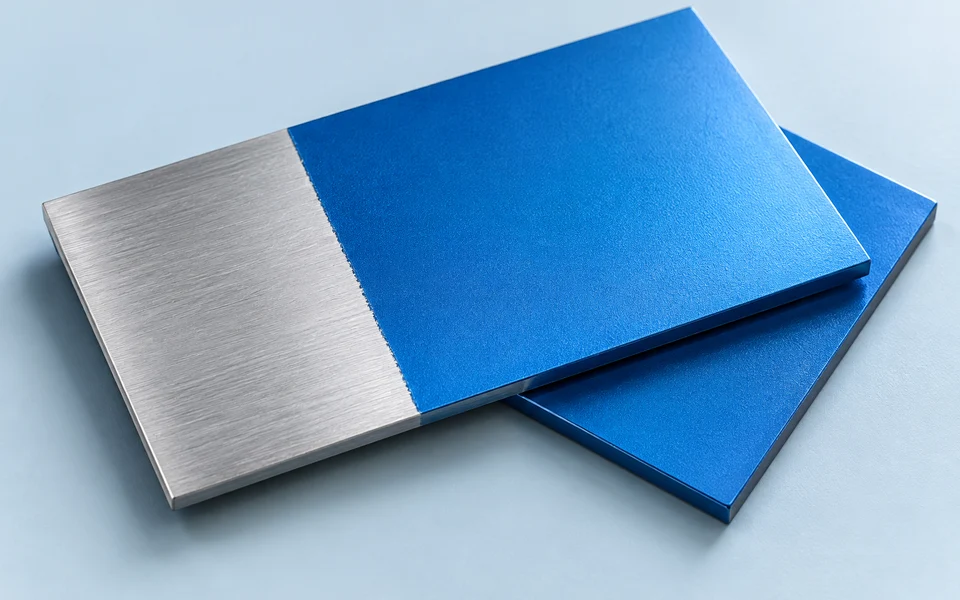
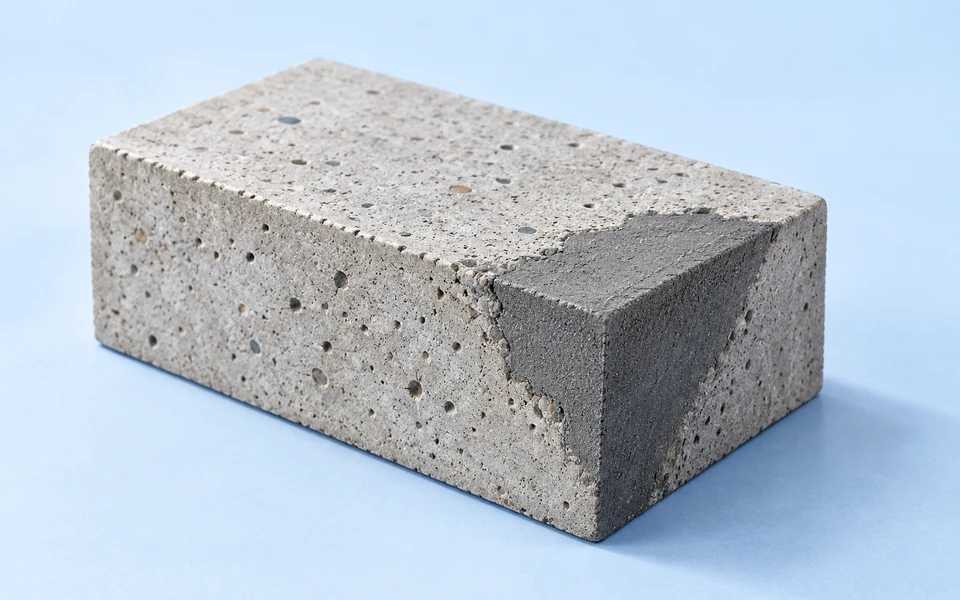
Assume that only one filled joint remains tacky, while the adjacent material cures. For the next test, the contact surfaces involved are examined separately: base material, filler, and finished coating. This allows us to narrow down which part of the structure is responsible for the differing behavior. The reference sample is produced using the same approach and under the same conditions.
Examine the layer sequence in the case of a sticky contact zone
The finding "hardened in the cup, sticky on the model" directs the investigation to the contact area, but does not yet prove the cause. A comparison of the surface conditions is now helpful: What materials and treatment steps were involved?
An additional coat of lacquer alters the contact surface. Whether it solves the problem or introduces a new one will only be revealed by testing with the complete setup. Elkem also points out the risk of cross-contamination from insufficiently cleaned tools. Therefore, the mixing vessel, stirring tool, and any materials previously processed in them should also be examined.
Select networking and processing together
RTV-2 silicones consist of two components. Elkem distinguishes between condensation and addition crosslinking: The described condensation reaction produces byproducts, while the addition reaction does not. Elkem: RTV-2 silicones
For manufacturing, these parameters must be translated into actionable steps. Dosage and mixing methods are appropriate for the product; the processing time must cover mixing and filling. The intended demolding time is also part of the selection process. The name of the crosslinking system alone does not provide these process values.
Remove the most difficult part from the mold first
After an inconspicuous contact test, the geometry is examined. A sample showing the most critical undercut reveals where the mold needs to be stretched or folded when opened. This allows the mold parting line to be checked before a large mold is produced.
Shore hardness only answers part of the material question. Hardness and tear resistance are tested separately; a soft feel provides no proof of the stress at a thin or notched point. ZwickRoell: Elastomer testing
The casting process concludes the sampling
The finished mold is then tested with the intended casting material. Only this process combines model compatibility, opening the mold, and demolding the final component.
The required characteristics are assessed: surface finish, dimensional accuracy, critical edges, and handling. The results apply to the tested setup and its conditions; a guaranteed number of subsequent castings cannot be derived from them in general terms.
Frequently asked questions
The contact test on the base material was good. Is that sufficient for a model with filler?
He is not yet checking the filled and coated areas. An additional sample should contain the same material sequence and surface treatment as the critical transition on the model.
What small geometric pattern is suitable for the first demolding attempt?
A section with the most critical undercut or the most stressed edge. It shows early on how the intended mold parting line and the material will behave when opened.
Sources
- BLUESIL RTV 3428 A&B PINK.WHITE.TRANS – Technical Data Sheet. Accessed 2026-10-26.
- Elkem: RTV-2. Accessed 2026-10-25.
- ZwickRoell: Elastomer testing. Accessed 2026-10-25.