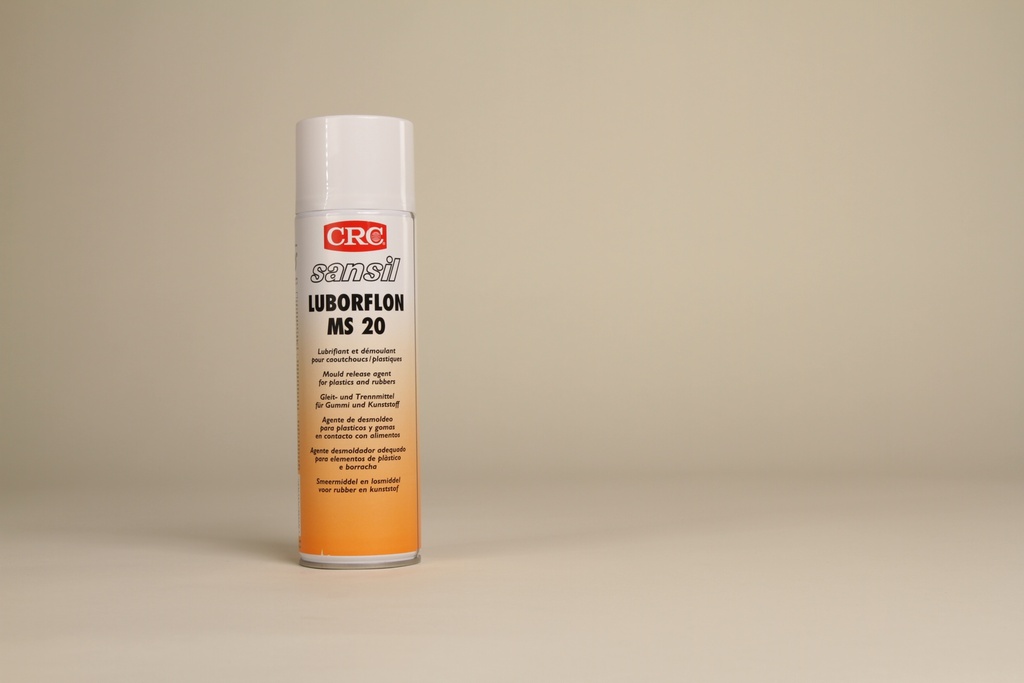
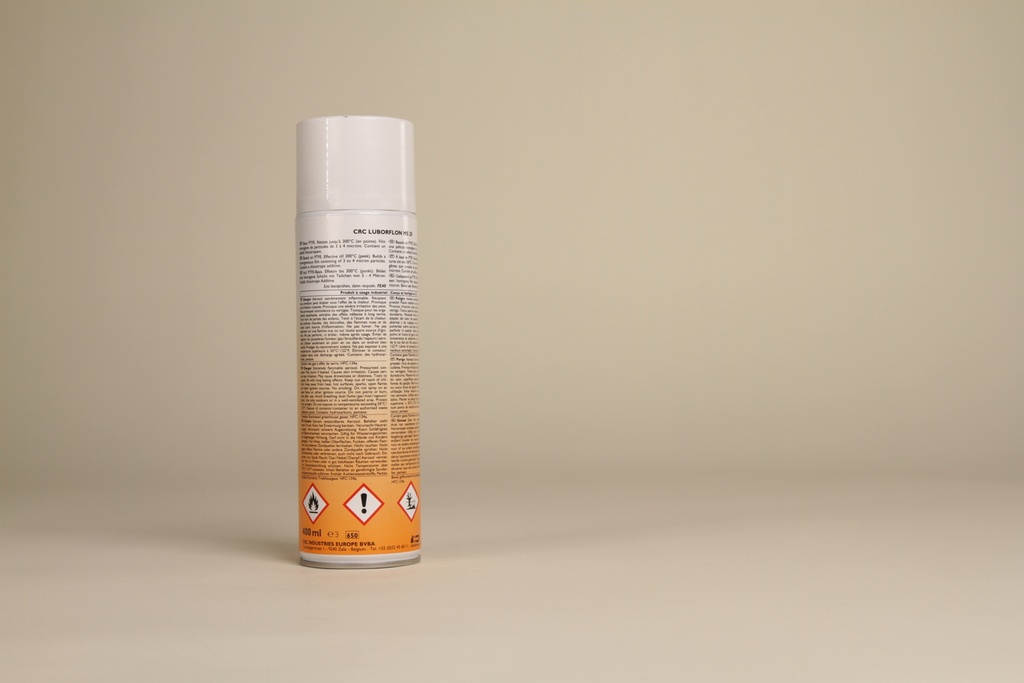
Luborflon MS 20
PTFE aerosol release agent for rubber and thermosetting plastics.
PTFE aerosol release agent for rubber and thermosetting plastics — silicone-free up to +300 °C, with adhesion additives for metal surfaces and particle size 3–4 μm for a uniform non-stick dry film
Documents
Internal Reference:
41-853.SP.ML400
HS Code:
34039900
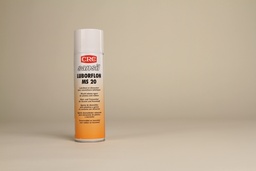
Luborflon MS 20 is a PTFE aerosol release agent for rubber and thermosetting plastics — silicone-free up to +300 °C, with adhesion additives for metal surfaces and particle size 3–4 μm for a uniform non-stick dry film.
Release sprays for composite and reaction casting applications — wax- and silicone-based spray release agents for clean demolding of polyester, epoxy, and polyurethane resins in model making, boat building, automotive body construction, and industrial fabrication. Luborflon MS 20 is tailored to specific industrial and workshop applications — the key properties and areas of application are listed below.
Sansil Luborflon MS 20 is an aerosol dispersion of a PTFE telomer in solvent — specially developed as a release agent for molding rubber and thermosetting plastics. Resistant to high temperatures up to +300 °C, silicone-free. Additives improve the adhesion of PTFE particles to metal surfaces. Aerosol spraying produces a very uniform film with particles of 3–4 μm — excellent non-stick and dry lubrication properties. Mixing ball for homogenization — shake the bottle before each use.
What sets Luborflon MS 20 apart
What is Luborflon MS 20 used for?
Processing
Recommended accessories
Luborflon MS 20 in comparison
Direct comparison with the related SILISIL sprays — the right choice for your application.
Luborflon MS 20 Current Product |
Release Spray TRS → | Wax Release Spray G&P → | SG-1001S → | |
|---|---|---|---|---|
| Active ingredient base | PTFE telomer | Wachs | Wachs | Silicone |
| Silicone status | silicone-free | silicone-free | silicone-free | silicone-containing |
| Thermal Stability | +300 °C | +120 °C | +90 °C | see TDS |
| Suitable resins | Rubber, thermosets | Epoxy, Polyester, PU | UP, epoxy, PMMA, PU, silicone rubber | PU, Epoxy, Thermoplastics |
| Main application | High-Temperature Release Spray | Composite release spray | Universal Wax Release Spray | Universal Release Spray |
Technical data for Luborflon MS 20
| Product Information | |
|---|---|
| Manufacturer | CRC |
| Container | 400 ml |
Please refer to the technical data sheet (TDS) in the "Documents" tab for binding values.
Frequently Asked Questions about Luborflon MS 20
Application and compatibility questions from practice — answered by SILITECH.
Luborflon MS 20: PTFE aerosol release agent for rubber and thermosetting plastics — silicone-free up to +300 °C, with adhesion additives for metal surfaces and particle size 3–4 μm for a uniform non-stick dry film. Main applications: rubber vulcanization, thermoset mold making, silicone-sensitive processes.
For polyester (UP) and epoxy resin (EP), wax-based sprays are standard (Neukadur P6, Wax Release Spray G&P, Release Spray TRS) — silicone-free, they leave the component paintable/glueable. For difficult polyurethane demolding with high requirements or multiple cycles, the silicone-containing ACHEM SG-1001S offers the highest release reserve. For each application: thin, even coat, allow to flash off — often repeated waxing before the first pour on new molds.
No. Silicone sprays leave a water-repellent silicone film that prevents the adhesion of paints, adhesives, and coatings. Do not apply to surfaces that will later be painted or overlaid, or clean thoroughly beforehand with SILISIL Silicone Remover.
Store aerosol can below +50 °C, protect from direct sunlight, keep away from ignition sources. Pressure container — do not forcibly open or incinerate, even after use. In unopened original packaging, shelf life according to SDS — observe the printed expiry date.
Polyester/Epoxy resin composites: Wax-based sprays — Neukadur P6 (UP/EP special), Wax Release Spray G&P (silicone-free, polishable up to +90 °C), Release Spray TRS (silicone-free up to +120 °C). Polyurethane challenges: ACHEM SG-1001S with highest release reserve for multiple demoldings. Food packaging: NSR Food FPS Spray with NSF M1 registration No. 155325. If uncertain about material compatibility, always perform a small test pour.
Your question not covered?
Our technical team provides personal advice on material selection, processing questions, and individual requirements. Fast and competent.
Product Specifications
| Manufacturer | CRC |
| Container | 400 ml |
| Keywords | |
|---|---|
| Keywords | |
Documents and data sheets
Safety Data Sheets (SDS) and Technical Data Sheets (TDS) for download: