)
)
PERMABOND 2011 Gel
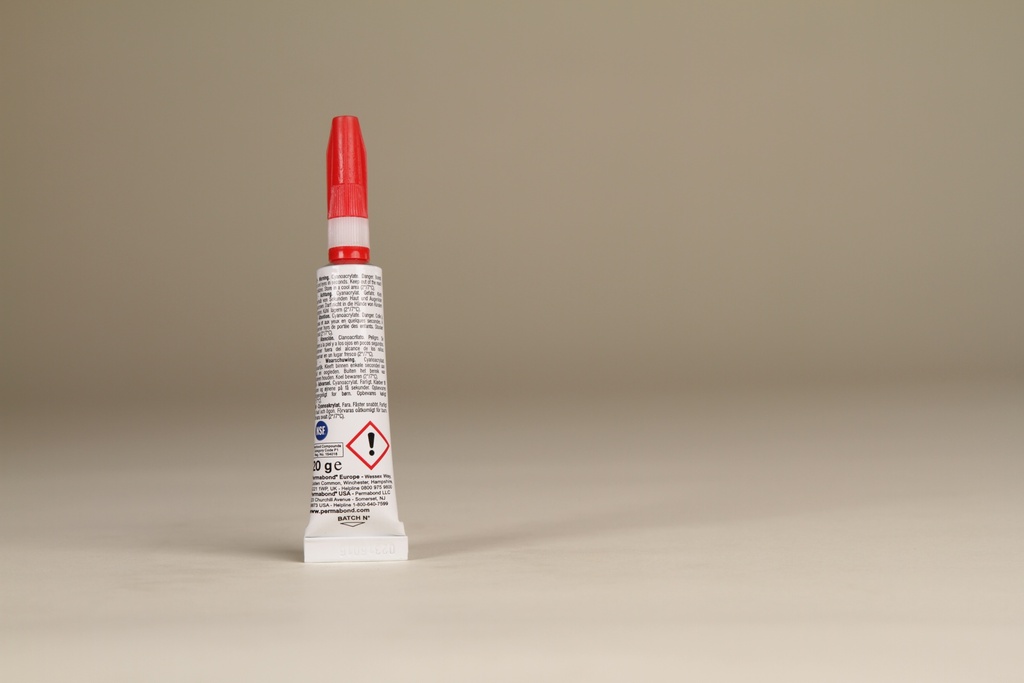
Permabond 2011 Gel — genuine ethyl cyanoacrylate gel for precise bonding of gaps up to 0.5 mm. NSF S4 approved.
Genuine cyanoacrylate gel with NSF S4 approval — stays precisely at the application site, fastest cure among the high-viscosity Permabond CAs.
Documents
Internal reference:
49-247
HS code:
3506.9190000
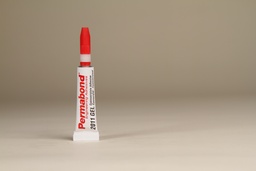
Permabond 2011 Gel is a true cyanoacrylate gel — it stays absolutely in place, does not flow and combines maximum gap filling (0.5 mm) with particularly fast curing and above-average strength values.
Unlike the thixotropic Permabond 2010, 2011 is a true gel —its consistency does not change even under pressure. This makes 2011 ideal for precise bonding applications where the adhesive must stay exactly where it is applied, without flowing into adjacent areas.
Permabond 2011 is NSF approved (Non-food Compound Category Code S4) — suitable for applications in food environments where there is no direct food contact, but hygiene requirements must be met.
NSF Non-food contact — qualified for indirect contact in the food and pharmaceutical environment (maintenance adhesives, machine components in non-food areas).
What distinguishes Permabond 2011 Gel
What is Permabond 2011 Gel used for?
Processing
Recommended accessories
Important Notes
Which Permabond for which application?
Permabond 2011 Gel in direct comparison with the high-viscosity cyanoacrylates.
| Permabond 2010 → | Permabond 2050 → |
Permabond 2011 Gel
Current Product
|
|
|---|---|---|---|
| Shape | Thixotropic / Semi-gel | Liquid (flexible) | Real gel |
| Max. gap fill. | 0.5 mm | 0.2 mm | 0.5 mm |
| Finger-tight on steel | 10–15 s | 10–15 s | 5–10 s |
| Shear strength steel | 19–23 N/mm² | 16–20 N/mm² | 20-24 N/mm² |
| Permit | WRAS Drinking Water | — | NSF S4 + CID Type II |
| Strength / Recommended for | Vertical/Overhead, Drinking Water | Vibration, impact, thermal cycles | Precisely accurate, NSF certified, highest plastic strength |
Technical data for PERMABOND 2011 Gel
| Product Information | |
|---|---|
| Manufacturer | Permabond Engineering Adhesives Ltd |
| Brand | Permabond |
| Container | 20 g, 300 g |
| Country of origin | Italy |
| UFI (Unique Formula Identifier) | DN70-Y0W8-000F-HC1P |
| Performance at Full Cure | |
|---|---|
| Impact strength (ASTM D-950) | 3-5 kJ/m² |
| Dielectric strength | 25 kV/mm |
| Physical Properties | |
|---|---|
| Color | colorless |
| Chemical group | Ethyl Cyanoacrylate |
| Viscosity (adhesives) | Gel |
| Electrical Properties | |
|---|---|
| Dielectric Constant | 2.5 (@ 10 kHz) |
| Dielectric strength (ASTM D-149) | 25 kV/mm |
| Curing values | |
|---|---|
| Maximum gap fill (mm) | 0.5 |
| Fixture time on steel (sec.) | 5-10 |
| Hand Strength Rubber (sec.) | 5-10 |
| Hand Strength Phenol (sec.) | 5-10 |
| Final strength | 24 hours |
| Product Approvals | |
|---|---|
| NSF Non-food contact | Yes |
| NSF: Category Code S4 Reg. No 155298 | YES |
| CID AA-3097 Type II Class 5 | YES |
| Mechanical properties | |
|---|---|
| Impact strength (ASTM D950) | 3-5 kJ/m² |
| Hardness (Shore D) | 85 |
| Shear strength ISO 4587 in N/mm² | |
|---|---|
| Steel | 20-24 |
| Aluminum | 8-9 |
| Zinc | 10 |
| ABS | >8 |
| PVC | >10 |
| Phenol | 14 |
| PC | >6 |
| Thermal Properties | |
|---|---|
| Thermal conductivity | 0.1 W/(m·K) |
| Coefficient of thermal expansion | 90 × 10⁻⁶ mm/mm/°C |
| Operating temperature (°C) | -55 to +80 |
| Storage Temperature (°C) | 2-7 |
Please refer to the technical data sheet (TDS) in the "Documents" tab for binding values.
Documents and data sheets
Click on a document for the preview or the download icon for direct download.
Technical Data Sheets (TDS) 3
Frequently asked questions about Permabond 2011 Gel
Practical application and design questions — answered by SILITECH.
Permabond 2011 Gel is a true cyanoacrylate gel — ideal for pinpoint bonding, vertical and overhead surfaces, porous substrates, and non-contact food applications (NSF S4 approved). With a 5–10 s handling strength on steel, 20–24 N/mm² shear strength, and a maximum gap filling of 0.5 mm, 2011 Gel offers the fastest curing and highest strength among the high-viscosity Permabond CAs.
Permabond 2011 Gel is approved according to NSF Non-food Compound Category Code S4 (Reg. No. 155298). This means the adhesive may be used in food environments where there is no direct food contact—for example, for repairs or bonding of machinery, components, or equipment in food production and packaging. Caution: 2011 is NOT approved for direct food contact.
Permabond 2010 is thixotropic (semi-gel) — viscous at rest, thinner under pressure. Permabond 2011 Gel is a true gel — remains pasty even under pressure. 2011 also has faster curing (5–10 vs. 10–15 s), higher tensile strength (20–24 vs. 19–23 N/mm² on steel), and NSF S4 approval. 2010, on the other hand, has WRAS drinking water approval. Choose 2011 for precise spot bonding and higher strength; choose 2010 for drinking water applications or when the material needs to flow into the gap.
Permabond 2011 Gel bonds steel (20–24 N/mm²), aluminum (8–9), zinc (10), plastics with substrate failure: ABS (>8), PVC (>10), PC (>6), phenolic resin (14), Buna-N rubber, and difficult-to-bond substrates. The surface-insensitive formulation is forgiving of slightly contaminated or challenging surfaces. For polypropylene, polyethylene, PTFE, and silicone, pretreatment with Permabond Polyolefin Primer (POP) required.
Permabond 2011 Gel should be stored unopened in a refrigerated container between 2 and 7 °C and is stable until the printed expiration date. Allow to warm to room temperature before opening to prevent condensation. Opened tubes remain functional for several months if stored correctly.
For precise spot bonding, non-contact food environments (NSF), and maximum plastic strength, Permabond 2011 Gel the right choice. For micro-gap and wicking applications, use Permabond 101.For general-purpose bonding Permabond 102.For demanding rubber bonding applications, use Permabond 105.For maximum steel strength, use Permabond 910.For vibration/impact applications, use Permabond 2050.For drinking water applications, use Permabond 2010.
Your question not covered?
Our technical team provides personal advice on material selection, processing questions, and individual requirements. Fast and competent.
Product Specifications
| Product Information | |
|---|---|
| Container | 20 g or 300 g |
| Manufacturer | Permabond Engineering Adhesives Ltd |
| Brand | Permabond |
| Country of origin | Italy |
| UFI (Unique Formula Identifier) | DN70-Y0W8-000F-HC1P |
| Performance at Full Cure | |
|---|---|
| Impact strength (ASTM D-950) | 3-5 kJ/m² |
| Dielectric strength | 25 kV/mm |
| Physical Properties | |
|---|---|
| Color | colorless |
| Chemical group | Ethyl Cyanoacrylate |
| Viscosity (adhesives) | Gel |
| Electrical Properties | |
|---|---|
| Dielectric Constant | 2.5 (@ 10 kHz) |
| Dielectric strength (ASTM D-149) | 25 kV/mm |
| Curing values | |
|---|---|
| Maximum gap fill (mm) | 0.5 |
| Fixture time on steel (sec.) | 5-10 |
| Hand Strength Rubber (sec.) | 5-10 |
| Hand Strength Phenol (sec.) | 5-10 |
| Final strength | 24 hours |
| Product Approvals | |
|---|---|
| NSF Non-food contact | Yes |
| NSF: Category Code S4 Reg. No 155298 | YES |
| CID AA-3097 Type II Class 5 | YES |
| Mechanical properties | |
|---|---|
| Impact strength (ASTM D950) | 3-5 kJ/m² |
| Hardness (Shore D) | 85 |
| Shear strength ISO 4587 in N/mm² | |
|---|---|
| Steel | 20-24 |
| Aluminum | 8-9 |
| Zinc | 10 |
| ABS | >8 |
| PVC | >10 |
| Phenol | 14 |
| PC | >6 |
| Thermal Properties | |
|---|---|
| Thermal conductivity | 0.1 W/(m·K) |
| Coefficient of thermal expansion | 90 × 10⁻⁶ mm/mm/°C |
| Operating temperature (°C) | -55 to +80 |
| Storage Temperature (°C) | 2-7 |
| Keywords | |
|---|---|
| Keywords | |
Documents and data sheets
Safety Data Sheets (SDS) and Technical Data Sheets (TDS) for download:
- Permabond 2011 Gel - Technique FR.pdf (339 KB)
- Permabond 2011 Gel - Fiche de Sécurité FR.pdf (333 KB)
- Permabond 2011 Gel - Safety Data Sheet EN.pdf (312 KB)
- Permabond 2011 Gel - Safety Data Sheet DE.pdf (334 KB)
- Permabond 2011 Gel - Technical Data Sheet EN.pdf (373 KB)
- Permabond 2011 Gel - Technical Data Sheet DE.pdf (336 KB)