)
SILBIONE RTV 4320
2K-Pt silicone paste for orthopedic insoles and heel spur pads — mixing ratio 1:1.
2K-Pt silicone paste (Shore A 20) for orthopedic insoles and heel spur pads — food and medical grade tested
Documents
Internal reference:
40-4320
HS code:
3910.0000
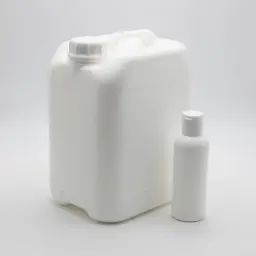
Silbione RTV 4320 A & B is a 2K-Pt silicone paste (Shore A 20) for orthopedic insoles and heel spur pads — tested to be food and medical compliant.
This product line comprises medically approved 2K polyaddition silicone pastes for orthopedic workshops — insoles, pads, pressure relief — biocompatible and tested. Silbione 4320 is tailored to specific industrial applications — the most important properties and areas of application are listed below.
Silbione RTV 4320 is specifically designed for the production of orthotic insoles and heel spur pads. Its paste consistency allows for direct adaptation to the foot, low linear shrinkage, and an excellent balance between hardness and tensile strength. Medically approved.
What makes Silbione 4320 stand out
What is Silbione 4320 used for?
processing
Recommended accessories
Important instructions
Silbione 4320 compared to related RTV products
Networking system, mechanics, and processing times side by side — all values from the official Elkem TDS. “— " = not specified in the datasheet.
Silbione 4320 Current product |
Silbione 4410 QC → | Silbione 4411 → | Silbione 4420 → | |
|---|---|---|---|---|
| Networking system | 2K Polyaddition (Pt) Paste | 2K Polyaddition (Pt) | 2K Polyaddition (Pt) | 2K Polyaddition (Pt) |
| Mixing ratio | 1 : 1 | 1 : 1 | 1 : 1 | 1 : 1 |
| Color | Whitish-brown (A) / white (B) | Translucent (A) / skin-colored (B) | Translucent | Translucent |
| Shore A hardness | A 20 | A 11 | A 11 | A 20 |
| Elongation at break | 200 % | 780 % | 1'000 % | 650 % |
| Tensile strength | — | 3.6 MPa | 3.8 MPa | 5.0 MPa |
| Tear resistance | 7 kN/m | 14 N/mm | 12 N/mm | 15 N/mm |
| Potting time | 2 min | 10 min | 60 min | 50 min |
| demolding time | 4 min | 60 min @ 80 °C | 30 min @ 120 °C | 60 min @ 80 °C |
| Mixed viscosity | paste | 1,500 mPa·s | 8,000 mPa·s | 4,000 mPa·s |
| Main application | Orthopedic insoles | Liners for leg prostheses | Leg prosthesis liner | Highly stressed liners |
Technical specifications for SILBIONE RTV 4320
| Product information | |
|---|---|
| brand | Silbione |
| Manufacturer | Elkem Silicones |
| Networking type | Addition (Platinum) |
| Container | 1kg + 1kg, 5kg + 5kg, 25kg + 25kg |
| Number of components | 2K (two-component) |
| consistency | Thixotropic |
| Mixing ratio | 1:1 |
| Other features | |
|---|---|
| UV resistance | No |
| Physical properties | |
|---|---|
| Paint has hardened | White |
| Self-leveling | No |
| Electrical properties | |
|---|---|
| Electrical insulation | No |
| Curing values | |
|---|---|
| Potting time (min) | 2 |
| Demolding time (min) | 4 |
| Product approvals | |
|---|---|
| Food contact | Yes |
| Suitable for medical use | Yes |
| Mechanical properties | |
|---|---|
| Elongation at break (%) | 200 |
| Tensile strength (N/mm) | 7 |
For binding values, please refer to the technical data sheet (TDS) in the "Documents" tab.
Documents and datasheets
Click on a document for a preview or the download icon for a direct download.
Frequently asked questions about Silbione 4320
Practical questions regarding processing and design — answered by SILITECH.
Silbione RTV 4320 A & B: 2K PT silicone paste (Shore A 20) for orthopedic insoles and heel spur pads — food-grade and medical-grade tested. Main applications include orthopedic insoles, heel spur pads, and pressure-relieving insoles.
Polyaddition crosslinking is a two-component silicone chemistry using a platinum catalyst. Component A contains the platinum complex, and component B contains the SiH crosslinker. When mixed, the components crosslink without releasing reaction byproducts—no shrinkage due to outgassing, excellent dimensional accuracy, and low linear shrinkage. Important: Polyaddition silicones are inhibited by various substances—sulfur-vulcanized natural rubbers, tin-catalyzed RTV silicones, amine-catalyzed epoxy resins, and tin-stabilized PVC. In case of doubt, a preliminary test should be carried out.
Thoroughly stir components A and B before each processing step. Measure precisely according to the mixing ratio specified in the TDS (see comparison table above) – ideally by weight. Mix with an electric or pneumatic agitator at low speed (minimize air entrainment). Degas the mixture under vacuum (30–50 mbar) – the material will expand 3–4 times its original volume, bubbles will escape, and the material will settle back after 5–10 minutes. Then slowly pour into the mold from the lowest point to avoid air entrapment. For polyaddition systems, avoid contact with inhibitors (sulfur-based rubber, tin-based RTV, amine epoxides, PVC with tin salts).
Store in the unopened original container in a dry, cool place — typically between +5 and +30 °C, see TDS for exact values. Store components A and B separately; seal airtight after opening. Polyaddition systems are insensitive to moisture, but should be stored in a cool place to maintain pot life. Consult the Safety Data Sheet (SDS) before use.
The comparison table above lists related RTV products with different hardnesses, pot lives, or application profiles. If you are unsure which product is best for you, we would be happy to advise you — contact SILITECH with details of your application (substrate, desired hardness, processing time, mechanical requirements, and durability).
Your question isn't listed here
Our technical team will advise you personally on material selection, processing questions, and individual requirements. Quickly and competently.
Product specifications
| Product information | |
|---|---|
| Container | 1kg + 1kg or 5kg + 5kg or 25kg + 25kg |
| brand | Silbione |
| Manufacturer | Elkem Silicones |
| Networking type | Addition (Platinum) |
| Number of components | 2K (two-component) |
| consistency | Thixotropic |
| Mixing ratio | 1:1 |
| Other features | |
|---|---|
| UV resistance | No |
| Physical properties | |
|---|---|
| Paint has hardened | White |
| Self-leveling | No |
| Electrical properties | |
|---|---|
| Electrical insulation | No |
| Curing values | |
|---|---|
| Potting time (min) | 2 |
| Demolding time (min) | 4 |
| Product approvals | |
|---|---|
| Food contact | Yes |
| Suitable for medical use | Yes |
| Mechanical properties | |
|---|---|
| Elongation at break (%) | 200 |
| Tensile strength (N/mm) | 7 |
| Keywords | |
|---|---|
| Keywords | |
| Mechanical properties | |
|---|---|
| Shore hardness A | 20.0 Shore A |
| Tensile strength | 2.0 MPa |
| Elongation at break | 200.0 % |
| Tear resistance | 7.0 kN/m |
| Linear shrinkage | < 0.1 % |
| processing | |
|---|---|
| Pot life at 23°C | 2.0 min |
| demolding time | 4.0 min |
| Physical & Thermal | |
|---|---|
| Density (23°C) | 1.4 g/cm³ |
| Temperature resistance (duration) | -50 to 150 °C |
| Peak temperature (short-term) | 150 °C |
| storage | |
|---|---|
| Shelf life in original packaging | 12 months |
| Storage temperature | -10 to 30 °C |
Documents and datasheets
Safety Data Sheets (SDS) and Technical Data Sheets (TDS) are available for download: