



 Silicones, silicone oils, sprays
 Casting and potting resins
Protective lacquer or potting for your electronics?
A circuit board in an enclosed device is exposed to different influences than an assembly in the open. Before choosing the material, it should be determined what the electronics need to be protected from.
Coating
A protective coating covers the surface with a relatively thin layer. The design and weight are largely preserved. Important considerations include ensuring complete coverage of the intended areas and keeping contacts clear.
Casting
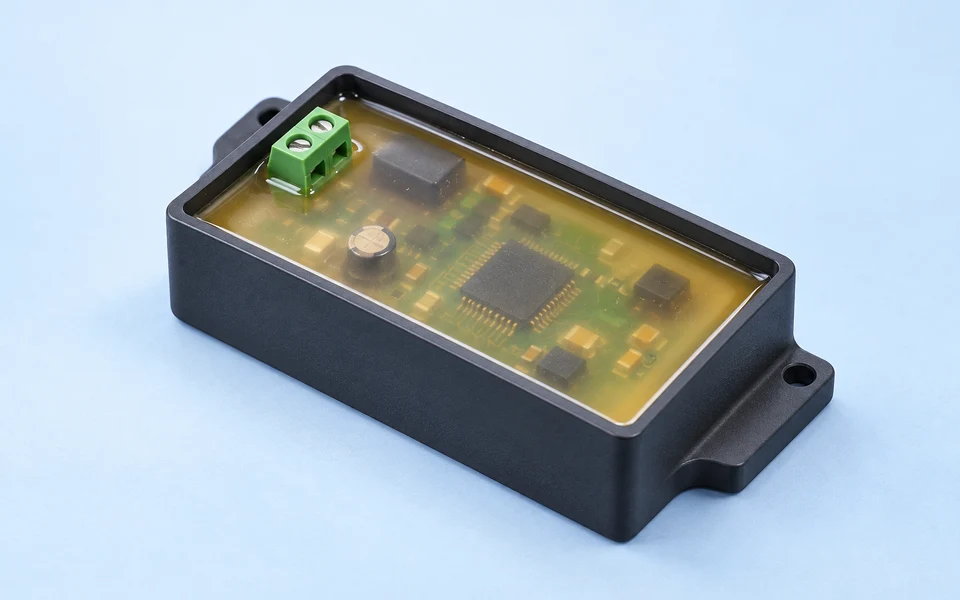
During potting, a volume around the assembly is filled with material. This can perform additional functions such as mechanical stabilization or insulation. At the same time, it changes the weight, heat dissipation, and the possibilities for future repairs.
Test the material on the assembly
Epoxy, polyurethane, and silicone offer different combinations of hardness, elasticity, and workability. The properties also vary within these material families. A test on the intended component will show whether the chosen product can be fully applied and cured as planned.
We will advise you on material selection and procure product documentation and test quantities.
Contributions and applications
Product groups: Resins & potting solutions · Silicone products · Adhesives & sealants · Surface treatment
Themed areas: Resins & potting solutions · Silicones · Adhesives & sealants
Knowledge articles: Conformal coatings compared · Potting vs. encapsulation · Thermally conductive potting compounds · Potting compounds for electronics · E-mobility battery assembly
Industries: Electronics & Printed Circuit Boards · E-Mobility & Batteries · Energy & High Voltage · Aerospace · Defense & Security
Terms: in the glossary (potting, conformal coating, dielectric strength, lambda value, low outgassing).