)
)
PERMABOND 2050
Permabond 2050 — Cyanoacrylate instant adhesive, viscosity 1200-1800 mPa·s, Shore D 85.
High-viscosity flexible industrial adhesive with double the impact strength — ideal for bonding different materials under vibration.
Documents
Internal reference:
49-2050.FL
HS code:
3506.9190000
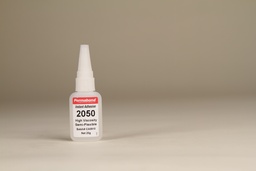
Permabond 2050 is a flexible, impact-modified cyanoacrylate adhesive — specifically for bonded joints that must withstand shock, vibration or thermal cycling.
With a viscosity of 1200–1800 mPa·s and a maximum gap filling of 0.2 mm, Permabond 2050 is one of the thickest cyanoacrylates in the range — ideal for vertical applications or large tolerances where standard cyanoacrylates would run.
The real USP: Its impact strength of 5–10 kJ/m² is more than twice that of standard cyanoacrylates . In addition, it offers significantly improved peel strength and vibration resistance. Permabond 2050 is the right choice when the adhesive bond is subjected to dynamic loads—and it's the only Permabond CA that can also bond silicone when used with POP primer .
Impact-resistant and flexible — suitable for bonding dissimilar materials (e.g., metal-plastic) that are subject to thermal shock or thermal cycling. Improved peel strength compared to standard cyanoacrylates.
What makes Permabond 2050 stand out
What is Permabond 2050 used for?
Processing
Recommended accessories
Important Notes
Which Permabond for which application?
Permabond 2050 in direct comparison — pay particular attention to impact strength and viscosity.
| Permabond 101 → | Permabond 102 → | Permabond 910 → |
Permabond 2050
Current Product
|
|
|---|---|---|---|---|
| Chemistry | Ethyl Cyanoacrylate | Ethyl Cyanoacrylate | Methyl cyanoacrylate | Ethyl-CA, flexible |
| Viscosity | 2–3 mPa·s | 70–90 mPa·s | 70–90 mPa·s | 1200-1800 mPa·s |
| Max. gap fill. | 0.05 mm | 0.15 mm | 0.15 mm | 0.2 mm |
| Shear strength steel | 19–23 N/mm² | 19–23 N/mm² | 23–29 N/mm² | 16-20 N/mm² |
| Impact strength | 3–5 kJ/m² | 3–5 kJ/m² | 3–5 kJ/m² | 5–10 kJ/m² |
| Strength / Recommended for | Wicking, microgap |
General purpose, larger column |
Highest steel strength |
Vibration, impact, thermal cycles |
Technical data for PERMABOND 2050
| Product Information | |
|---|---|
| Manufacturer | Permabond Engineering Adhesives Ltd |
| Brand | Permabond |
| Container | 20 g, 50 g, 500 g |
| Country of origin | Italy |
| UFI (Unique Formula Identifier) | YHJ0-608W-700C-MM23 |
| Performance at Full Cure | |
|---|---|
| Impact strength (ASTM D-950) | 5-10 kJ/m² |
| Dielectric strength | 25 kV/mm |
| Physical Properties | |
|---|---|
| Color | colorless |
| Chemical group | Ethyl Cyanoacrylate |
| Viscosity (adhesives) | Medium viscosity 500 - 5000 mPas |
| Viscosity mPa.s | 1200-1800 |
| Specific Gravity | 1.1 |
| Electrical Properties | |
|---|---|
| Dielectric Constant | 2.5 (@ 10 kHz) |
| Dielectric strength (ASTM D-149) | 25 kV/mm |
| Curing values | |
|---|---|
| Maximum gap fill (mm) | 0.2 |
| Fixture time on steel (sec.) | 10-15 |
| Hand Strength Rubber (sec.) | 5-10 |
| Hand Strength Phenol (sec.) | 5-10 |
| Final strength | 24 hours |
| Mechanical properties | |
|---|---|
| Impact strength (ASTM D950) | 5-10 kJ/m² |
| Hardness (Shore D) | 85 |
| Shear strength ISO 4587 in N/mm² | |
|---|---|
| Steel | 16-20 |
| ABS | >6 |
| PVC | >6 |
| PC | >5 |
| Thermal Properties | |
|---|---|
| Thermal conductivity | 0.1 W/(m·K) |
| Coefficient of thermal expansion | 90 × 10⁻⁶ mm/mm/°C |
| Operating temperature (°C) | -55 to +80 |
| Storage Temperature (°C) | 2-7 |
Please refer to the technical data sheet (TDS) in the "Documents" tab for binding values.
Documents and data sheets
Click on a document for the preview or the download icon for direct download.
Technical Data Sheets (TDS) 3
Frequently asked questions about Permabond 2050
Practical application and design questions — answered by SILITECH.
Permabond 2050 is a flexible, high-impact cyanoacrylate adhesive (1200–1800 mPa·s) for dynamically stressed bonding applications—vibration, shock, and thermal cycling—where standard cyanoacrylates would fail due to brittleness. With twice the impact strength (5–10 kJ/m²), a maximum gap filling of 0.2 mm, and the rare ability to bond silicone when used with a POP primer, Permabond 2050 is the ideal choice for demanding bonding applications involving diverse materials.
Standard cyanoacrylates have a hard, brittle bond—it can tear under impact or vibration. Permabond 2050 is modified with elastomers: the bond remains strong but yields minimally under load instead of breaking. This doubles the impact strength (5–10 kJ/m² instead of 3–5 kJ/m²) and significantly improves peel strength. The trade-off: the purely static shear strength on steel is slightly lower at 16–20 N/mm² than standard cyanoacrylates (19–23 N/mm²), but the bond withstands dynamic loads much better.
Permabond 2050 bonds steel (16–20 N/mm²), Buna-N rubber, and plastics: ABS (>6 N/mm² SF), PVC (>8 SF), and polycarbonate (>5 SF), each with substrate failure. A special feature: in combination with Permabond Polyolefin Primer (POP), Permabond 2050 also bonds silicone—the only Permabond CA product to do so. Pretreatment with POP is also required for PP, PE, and PTFE. Permabond 2050 is particularly suitable for bonding dissimilar materials (e.g., metal-plastic).
Permabond 2050 is not approved to MIL-A-46050C — the special formulation with Toughener modification does not meet the classic cyanoacrylate MIL specifications. For MIL-approved applications, we recommend Permabond 101, 102, 105 , or 910.Permabond 2050 is chosen when dynamic loading is more important than formal approval.
Choose Permabond 2050when the bond is subject to shock, vibration, or thermal cycling—for example, in mobile devices, machinery with dynamic loads, or when bonding dissimilar materials with different coefficients of thermal expansion. Permabond 102 is the right choice for standard static bonding with higher shear strength (19–23 vs. 16–20 N/mm²) and lower viscosity (70–90 vs. 1200–1800 mPa·s). Permabond 2050 is also preferable for vertical applications because its high viscosity prevents runoff.
Permabond 2050 should be stored unopened refrigerated at 2 to 7 °C and is stable until the printed expiration date. Allow the bottle to warm to room temperature before opening – this prevents condensation. Opened bottles remain functional for several months if stored correctly. Due to the Toughener modification, reactivity may decrease slightly with prolonged storage – we recommend a test bond before critical production applications.
For bonding applications subject to vibration or impact, as well as for bonding dissimilar materials, Permabond 2050 the right choice. Permabond 101 ideal for micro-gap bonding and wicking. For general-purpose bonding with larger gaps, Permabond 102 is recommended. For demanding rubber bonding applications (NR, EPDM, butyl) and visible components, Permabond 105 is suitable. For maximum strength on metals , Permabond 910is recommended. For polypropylene, polyethylene, PTFE, and silicone, pretreatment with Permabond POP Primer required.
Your question not covered?
Our technical team provides personal advice on material selection, processing questions, and individual requirements. Fast and competent.
Product Specifications
| Product Information | |
|---|---|
| Container | 20 g or 50 g or 500 g |
| Manufacturer | Permabond Engineering Adhesives Ltd |
| Brand | Permabond |
| Country of origin | Italy |
| UFI (Unique Formula Identifier) | YHJ0-608W-700C-MM23 |
| Performance at Full Cure | |
|---|---|
| Impact strength (ASTM D-950) | 5-10 kJ/m² |
| Dielectric strength | 25 kV/mm |
| Physical Properties | |
|---|---|
| Color | colorless |
| Chemical group | Ethyl Cyanoacrylate |
| Viscosity (adhesives) | Medium viscosity 500 - 5000 mPas |
| Viscosity mPa.s | 1200-1800 |
| Specific Gravity | 1.1 |
| Electrical Properties | |
|---|---|
| Dielectric Constant | 2.5 (@ 10 kHz) |
| Dielectric strength (ASTM D-149) | 25 kV/mm |
| Curing values | |
|---|---|
| Maximum gap fill (mm) | 0.2 |
| Fixture time on steel (sec.) | 10-15 |
| Hand Strength Rubber (sec.) | 5-10 |
| Hand Strength Phenol (sec.) | 5-10 |
| Final strength | 24 hours |
| Mechanical properties | |
|---|---|
| Impact strength (ASTM D950) | 5-10 kJ/m² |
| Hardness (Shore D) | 85 |
| Shear strength ISO 4587 in N/mm² | |
|---|---|
| Steel | 16-20 |
| ABS | >6 |
| PVC | >6 |
| PC | >5 |
| Thermal Properties | |
|---|---|
| Thermal conductivity | 0.1 W/(m·K) |
| Coefficient of thermal expansion | 90 × 10⁻⁶ mm/mm/°C |
| Operating temperature (°C) | -55 to +80 |
| Storage Temperature (°C) | 2-7 |
| Keywords | |
|---|---|
| Keywords | |
Documents and data sheets
Safety Data Sheets (SDS) and Technical Data Sheets (TDS) for download:
- Permabond 2050 - Technical Data Sheet FR.pdf (340 KB)
- Permabond 2050 - Fiche de Sécurité FR.pdf (334 KB)
- Permabond 2050 - Safety Data Sheet EN.pdf (311 KB)
- Permabond 2050 - Safety Data Sheet DE.pdf (335 KB)
- Permabond 2050 - Technical Data Sheet EN.pdf (372 KB)
- Permabond 2050 - Technical Data Sheet DE.pdf (334 KB)