)
)
PERMABOND 240
Permabond 240 — Cyanoacrylate instant adhesive, viscosity 1200-2500 mPa·s, Shore D 85.
High-viscosity industrial adhesive (formerly C4) with extended curing time — ideal for foamed elastomers and large components requiring more adjustment time.
Documents
Internal reference:
49-237.FL
HS code:
3506.9190000
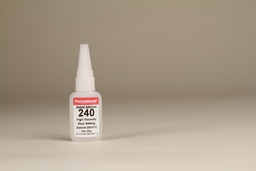
Permabond 240 (formerly C4) is a high-viscosity, slow-curing cyanoacrylate adhesive — specifically for bonding large components, foamed elastomers and applications where more time is needed to accurately align the parts being joined.
With a viscosity of 1,200–2,500 mPa·s, a gap filling capacity of up to 0.4 mm and a deliberately delayed curing speed (15–20 s handling strength), Permabond 240 stands out from the fast-curing standard CAs: the user gets time for precise adjustmentinstead of working under pressure.
The high viscosity also enables the reliable bonding of foamed elastomers and porous materials into which low-viscosity cyanoacrylates would simply seep.
MIL-A-46050C Type II Class 3 — qualified for industrial and defense applications. Additionally , WRAS Drinking Water Approval (cold water use only) — British standard for direct contact with cold drinking water.
What makes Permabond 240 stand out
What is Permabond 240 used for?
processing
Recommended accessories
Important instructions
Which Permabond is suitable for which application?
Permabond 240 in direct comparison with the related high-viscosity and impact-resistant cyanoacrylates.
| Permabond 102 → | Permabond 2050 → | Permabond 2010 → |
Permabond 240
Current product
|
|
|---|---|---|---|---|
| viscosity | 70–90 mPa·s | 1200–1800 mPa·s | 2000–2500 (thixotropic) | 1500–2500 mPa·s |
| Maximum gap filling. | 0.15 mm | 0.2 mm | 0.5 mm | 0.4 mm |
| Firmly on steel | 10–15 s | 10–15 s | 10–15 s | 15–20 s (slowly) |
| Shear strength steel | 19–23 N/mm² | 16–20 N/mm² | 19–23 N/mm² | 21–25 N/mm² |
| hardness | 85 Shore D | 85 Shore D | 85 Shore D | 85 Shore D |
| MIL-A-46050C | Type II Class 2 | — | — | Type II Class 3 |
| Strength / Recommended for | General-purpose adhesive, larger gaps | Vibration, impact, flexible seam | Vertical, Drinking Water (WRAS) | Foamed elastomers, large components, adjustment time |
Technical data for PERMABOND 240
| Product information | |
|---|---|
| Manufacturer | Permabond Engineering Adhesives Ltd |
| brand | Permabond |
| Container | 20 g, 50 g, 500 g |
| Country of origin | Italy |
| UFI (Unique Formula Identifier) | T170-F02F-U00Y-WXY7 |
| Performance at final strength | |
|---|---|
| Impact resistance (astm D-950) | 3-5 kJ/m² |
| Dielectric strength | 25 kV/mm |
| Physical properties | |
|---|---|
| Color | colorless |
| Chemical group | Ethyl cyanoacrylate |
| Viscosity (adhesives) | Medium viscosity 500 - 5000 mPas |
| Viscosity mPa·s | 1200-2500 |
| Specific gravity | 1.1 |
| Curing values | |
|---|---|
| Maximum gap width (mm) | 0.4 |
| Steel hand strength (sec.) | 15-20 |
| Rubber's hand strength (sec.) | 15-20 |
| Hand strength of phenol (seconds) | 15-20 |
| Final strength | 24 hours |
| Product approvals | |
|---|---|
| WRAS Drinking Water Approval | cold water use only |
| MIL-A-46050C Type II Class 3 | YES |
| Mechanical properties | |
|---|---|
| Hardness (Shore D) | 85 |
| Shear strength ISO 4587 in N/mm² | |
|---|---|
| Steel | 21-25 |
| ABS | >8 |
| PVC | >11 |
| PC | >5 |
| phenol | 14 |
| Thermal properties | |
|---|---|
| thermal conductivity | 0.1 W/(m·K) |
| coefficient of thermal expansion | 90 × 10⁻⁶ mm/mm/°C |
| Operating temperature (°C) | -55 to +80 |
| Storage temperature (°C) | 2-7 |
For binding values, please refer to the technical data sheet (TDS) in the "Documents" tab.
Documents and datasheets
Click on a document for a preview or the download icon for a direct download.
Technical Data Sheets (TDS) 3
Frequently asked questions about Permabond 240
Practical application and design questions — answered by SILITECH.
Permabond 240 (formerly known as Permabond C4) is a high-viscosity cyanoacrylate adhesive (1,200–2,500 mPa·s) with an extended curing time (15–20 s handling strength on steel). Ideal for: bonding foamed elastomers and foams, large-area components (more setup time), bonding plastics with substrate failure (ABS >8, PVC >11, PC >5 N/mm²), and applications requiring MIL-A-46050C Type II Class 3 approval.
Permabond 240 is the current name for the product formerly sold as Permabond C4 . The formulation and technical properties remain unchanged—only the product name has been updated to 240 as part of the standardization of the Permabond product range. Existing applications with C4 specifications can be directly converted to 240.
Standard cyanoacrylates reach handling strength on steel in 3–10 seconds—making precise alignment of complex components difficult. Permabond 240 deliberately takes 15–20 seconds, allowing users ample time to position the parts. This extended open time is crucial for achieving a clean bond, especially with large or complex components or bonds with long butt joints.
Permabond 240 bonds: steel (21–25 N/mm²), aluminum (8–9), zinc (10), plastics with substrate failure — ABS (>8 N/mm² SV), PVC (>11 N/mm² SV), PC (>5 N/mm² SV), phenolic resin (14 N/mm²), Buna-N rubber, and particularly well- foamed elastomers (EPDM foam, sponge rubber, PU foams). Pretreatment with Permabond POP primer is required for PP, PE, PTFE, and silicone .
Permabond 240 is highly viscous (1200–2500 mPa·s), fills large gaps (0.4 mm), has an extended cure time (15–20 s), and is MIL-A-46050C Class 3 approved — the choice for foamed elastomers, large components, and applications with more setup time. Permabond 102 is medium viscous (70–90 mPa·s), faster (10–15 s), and Class 2 — the choice for standard bonding tasks with smaller gaps and faster processing.
Permabond 240 should be stored unopened at 2 to 7 °C. Allow to warm to room temperature before opening to prevent condensation. Opened bottles remain functional for several months if stored correctly. We recommend a test bond to check reactivity before important production applications.
For foamed elastomers, large components, and MIL-approved applications with extended setting time, Permabond 240 the right choice. For micro-gap/wicking applications, use Permabond 101.For general-purpose applications with larger gaps, PermabondFor demanding rubber bonding applications, use Permabond 105.For maximum steel strength, Permabond 910.For vibration/impact-loaded bonds with double the impact strength, use Permabond 2050.For drinking water 2010; for NSF/food environment applications, use Permabond 2011 Gel.
Your question isn't listed here
Our technical team will advise you personally on material selection, processing questions, and individual requirements. Quickly and competently.
Product specifications
| Product information | |
|---|---|
| Container | 20 g or 50 g or 500 g |
| Manufacturer | Permabond Engineering Adhesives Ltd |
| brand | Permabond |
| Country of origin | Italy |
| UFI (Unique Formula Identifier) | T170-F02F-U00Y-WXY7 |
| Performance at final strength | |
|---|---|
| Impact resistance (astm D-950) | 3-5 kJ/m² |
| Dielectric strength | 25 kV/mm |
| Physical properties | |
|---|---|
| Color | colorless |
| Chemical group | Ethyl cyanoacrylate |
| Viscosity (adhesives) | Medium viscosity 500 - 5000 mPas |
| Viscosity mPa·s | 1200-2500 |
| Specific gravity | 1.1 |
| Curing values | |
|---|---|
| Maximum gap width (mm) | 0.4 |
| Steel hand strength (sec.) | 15-20 |
| Rubber's hand strength (sec.) | 15-20 |
| Hand strength of phenol (seconds) | 15-20 |
| Final strength | 24 hours |
| Product approvals | |
|---|---|
| WRAS Drinking Water Approval | cold water use only |
| MIL-A-46050C Type II Class 3 | YES |
| Mechanical properties | |
|---|---|
| Hardness (Shore D) | 85 |
| Shear strength ISO 4587 in N/mm² | |
|---|---|
| Steel | 21-25 |
| ABS | >8 |
| PVC | >11 |
| PC | >5 |
| phenol | 14 |
| Thermal properties | |
|---|---|
| thermal conductivity | 0.1 W/(m·K) |
| coefficient of thermal expansion | 90 × 10⁻⁶ mm/mm/°C |
| Operating temperature (°C) | -55 to +80 |
| Storage temperature (°C) | 2-7 |
| Keywords | |
|---|---|
| Keywords | |
Documents and datasheets
Safety Data Sheets (SDS) and Technical Data Sheets (TDS) are available for download:
- Permabond 240 - Technical Data Sheet FR.pdf (339 KB)
- Permabond 240 - Fiche de Sécurité FR.pdf (429 KB)
- Permabond 240 - Safety Data Sheet EN.pdf (421 KB)
- Permabond 240 - Safety Data Sheet DE.pdf (431 KB)
- Permabond 240 - Technical Data Sheet EN.pdf (373 KB)
- Permabond 240 - Technical Data Sheet DE.pdf (334 KB)