![YouTube - [Video]](https://www.silitech.ch/web/image/product.image/433/image_128/youtube - [Video])
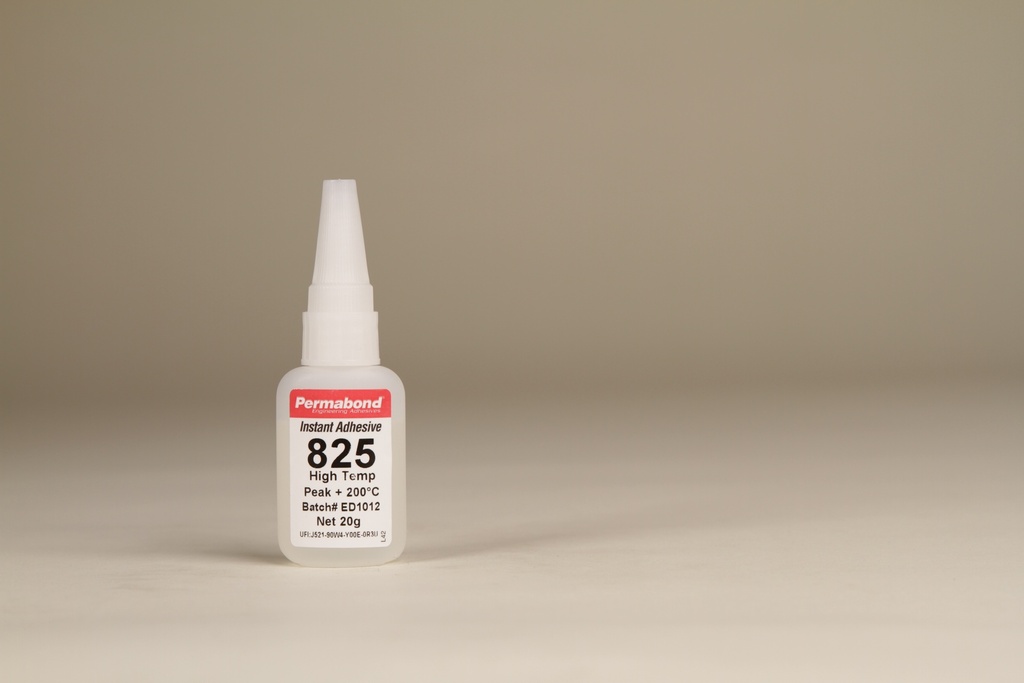
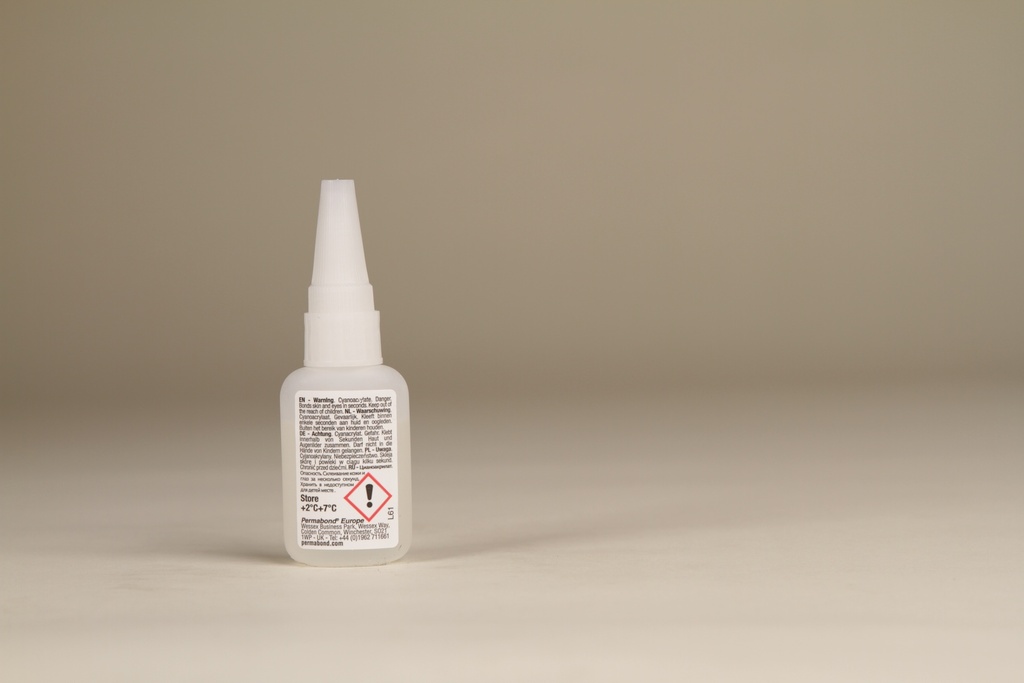
PERMABOND 825
Permabond 825 — Cyanoacrylate instant adhesive, viscosity 100-150 mPa·s, Shore D 85.
Durable up to 180 °C — even bonds HDPE and LDPE directly, without polyolefin primer.
Documents
Internal reference:
49-825.FL.G020
HS code:
3506.9190000
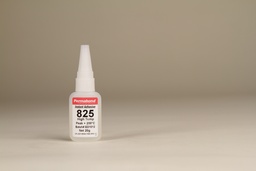
Permabond 825 is the premium high-temperature cyanoacrylate adhesive of the 800 series — designed for continuous use at up to 180 °C and can also be bonded to HDPE and LDPE without the need for a polyolefin primer.
With a viscosity of 100–150 mPa·s, 825 is medium-viscosity. What distinguishes 825 from the other high-temperature variants is its excellent resistance to thermal aging: After 1,000 hours at 180 °C, approximately 75% of the initial strength is retained — values that 801 / 802 / 820 do not achieve.
On steel, 825 delivers a shear strength of 15–20 N/mm², and on stainless steel up to 22 N/mm². Curing times are particularly short on NBR and phenolic resins at 5–10 seconds. Unusually for a cyanoacrylate, 825 also bonds HDPE (10–20 seconds handling strength) and LDPE (40–60 seconds) without a polyolefin primer—albeit with reduced strength compared to standard substrates.
Highest heat resistance of the Permabond Standard CA series — after 1,000 hours of thermal aging at 180 °C, approximately 75% of the initial strength remains. Additionally, it can be bonded to HDPE and LDPE — a rare property for cyanoacrylates.
What distinguishes Permabond 825
What is Permabond 825 used for?
processing
Recommended accessories
Important instructions
Which Permabond is suitable for which application?
Permabond 825 in direct comparison with related cyanoacrylate products.
Permabond 825 Current product | Permabond 801 → | Permabond 802 → | Permabond 820 → | |
|---|---|---|---|---|
| Chemistry | Ethyl cyanoacrylate | Ethyl-CA | Ethyl-CA | Ethyl-CA |
| viscosity | 100-150 mPa·s | 10–15 mPa·s | 90–110 mPa·s | 100 mPa·s |
| Maximum gap filling. | 0.15 mm | 0.05 mm | 0.15 mm | 0.15 mm |
| Firmly on steel | 10–20 s | 10–15 s | 10–15 s | 10–15 s |
| Shear strength steel | 15-20 N/mm² | 19–23 N/mm² | 19–23 N/mm² | 19–23 N/mm² |
| Strength / Recommended for | Thermally aging resistant up to 180 °C | Ultra-low, Wicking | Medium viscosity, standard | High temperature + biocompatible |
Technical data for PERMABOND 825
| Product information | |
|---|---|
| Manufacturer | Permabond Engineering Adhesives Ltd |
| brand | Permabond |
| Container | 20 g |
| Country of origin | Italy |
| UFI (Unique Formula Identifier) | J521-90W4-Y00E-0R3U |
| Physical properties | |
|---|---|
| Color | colorless |
| Chemical group | Ethyl cyanoacrylate |
| Viscosity (adhesives) | Low viscosity <500 MPas |
| Viscosity mPa·s | 100-150 |
| Curing values | |
|---|---|
| Maximum gap width (mm) | 0.15 |
| Steel hand strength (sec.) | 10-20 |
| Rubber's hand strength (sec.) | 10-15 |
| Hand strength of phenol (seconds) | 5-10 |
| Final strength | 24 hours |
| Mechanical properties | |
|---|---|
| Hardness (Shore D) | 85 |
| Shear strength ISO 4587 in N/mm² | |
|---|---|
| Steel | 15-20 |
| Thermal properties | |
|---|---|
| Operating temperature (°C) | -40 to 200 |
| Storage temperature (°C) | 2-7 |
For binding values, please refer to the technical data sheet (TDS) in the "Documents" tab.
Documents and datasheets
Click on a document for a preview or the download icon for a direct download.
Technical Data Sheets (TDS) 3
Frequently asked questions about Permabond 825
Practical application and design questions — answered by SILITECH.
Permabond 825 is an ethyl cyanoacrylate instant adhesive with a viscosity of 100–150 mPa·s and a maximum gap filling capacity of 0.15 mm. Premium high-temperature cyanoacrylate adhesive up to 180 °C — also suitable for HDPE and LDPE.
Permabond 825 reliably bonds steel (15–20 N/mm²), aluminum (12–16 N/mm²), ABS (>6 N/mm² (substrate failure)), PVC (>5 N/mm² (substrate failure)), polycarbonate (>5 N/mm² (substrate failure)), as well as Buna-N rubber and similar elastomers. For polypropylene (PP), polyethylene (PE), PTFE, and silicone, pretreatment with Permabond Polyolefin Primer (POP) is required.
Highest heat resistance of the Permabond Standard CA series — after 1,000 hours of thermal aging at 180 °C, approximately 75% of the initial strength remains. Additionally, it can be bonded to HDPE and LDPE — a rare property for cyanoacrylates.
Permabond 825 reaches handling strength on steel in 10–20 s. Other typical curing times: 5–10 s (NBR), 5–10 s (phenol), 10–20 s (HDPE), 40–60 s (LDPE). The final strength of 15–20 N/mm² (steel) is reached after 24 hours. Temperature, humidity, and substrate affect the curing rate.
Permabond 825 offers a viscosity of 100–150 mPa·s, a gap filling capacity of 0.15 mm, and a shear strength of 15–20 N/mm² on steel. Permabond 801 has a viscosity of 10–15 mPa·s, a gap filling capacity of 0.05 mm, and a shear strength of 19–23 N/mm² on steel (ultra-low wicking). Both utilize an ethyl cyanoacrylate base (or a related cyanoacrylate variant).
Permabond 825 should be stored unopened at 2 to 7 °C and is stable until the printed expiration date. Allow the bottle to warm to room temperature before opening—this prevents condensation inside, which would reduce its shelf life. Opened bottles remain functional for several months if stored correctly, although the curing rate may decrease over time. We recommend a test bond to check reactivity before critical production applications.
From the Permabond cyanoacrylate range, select according to viscosity and special properties: Permabond 825 (100–150 mPa·s, 0.15 mm gap width, thermally aging resistant); Permabond 801 (10–15 mPa·s, 0.05 mm, ultra-low viscosity, wicking); Permabond 802 (90–110 mPa·s, 0.15 mm, medium viscosity, standard); Permabond 820 (100 mPa·s, 0.15 mm, high temperature + biocompatible). For polypropylene, polyethylene, PTFE, and silicone, pretreatment with Permabond Polyolefin Primer (POP) is always required.
Your question isn't listed here
Our technical team will advise you personally on material selection, processing questions, and individual requirements. Quickly and competently.
Product specifications
| Product information | |
|---|---|
| Manufacturer | Permabond Engineering Adhesives Ltd |
| brand | Permabond |
| Container | 20 g |
| Country of origin | Italy |
| UFI (Unique Formula Identifier) | J521-90W4-Y00E-0R3U |
| Physical properties | |
|---|---|
| Color | colorless |
| Chemical group | Ethyl cyanoacrylate |
| Viscosity (adhesives) | Low viscosity <500 MPas |
| Viscosity mPa·s | 100-150 |
| Curing values | |
|---|---|
| Maximum gap width (mm) | 0.15 |
| Steel hand strength (sec.) | 10-20 |
| Rubber's hand strength (sec.) | 10-15 |
| Hand strength of phenol (seconds) | 5-10 |
| Final strength | 24 hours |
| Mechanical properties | |
|---|---|
| Hardness (Shore D) | 85 |
| Shear strength ISO 4587 in N/mm² | |
|---|---|
| Steel | 15-20 |
| Thermal properties | |
|---|---|
| Operating temperature (°C) | -40 to 200 |
| Storage temperature (°C) | 2-7 |
| Keywords | |
|---|---|
| Keywords | |
Documents and datasheets
Safety Data Sheets (SDS) and Technical Data Sheets (TDS) are available for download:
- Permabond 825 - Technical Data Sheet FR.pdf (338 KB)
- Permabond 825 - Fiche de Sécurité FR.pdf (394 KB)
- Permabond 825 - Safety Data Sheet EN.pdf (390 KB)
- Permabond 825 - Safety Data Sheet DE.pdf (395 KB)
- Permabond 825 - Technical Data Sheet EN.pdf (375 KB)
- Permabond 825 - Technical Data Sheet DE.pdf (335 KB)